Choosing NM400 wear plate: hardness, thickness, economics
The commonest wear-plate question is also the wrong one: "do you have anything harder than NM500?" Choosing wear plate is like buying shoes — fit beats prestige. Hopper liners, bucket floors and scraper bars wear in different ways; matching hardness to the wear mode is where the money is saved.
Question one: what kind of wear?
Sliding wear (material scrubbing along the plate) suits high-hardness NM grades. Impact wear (big lumps landing) suits MN13 austenitic manganese steel, which work-hardens under blows. Mixed duty — a feed chute's upper half, say — takes NM450 with MN13 patches where the impacts land. Getting the direction wrong doubles wear in one case and cracks plate in the other.
Question two: how hard, where?
NM360 to NM600 spans roughly 330 to 600 HB. Field rule of thumb: easy-to-change parts take a harder grade (a small liner swaps in minutes, worth paying up); the parent structure takes a step lower (big fabrications need crack resistance more than peak hardness). Dump-body floors commonly pair NM400 with NM450; crusher circuits go straight to NM500.
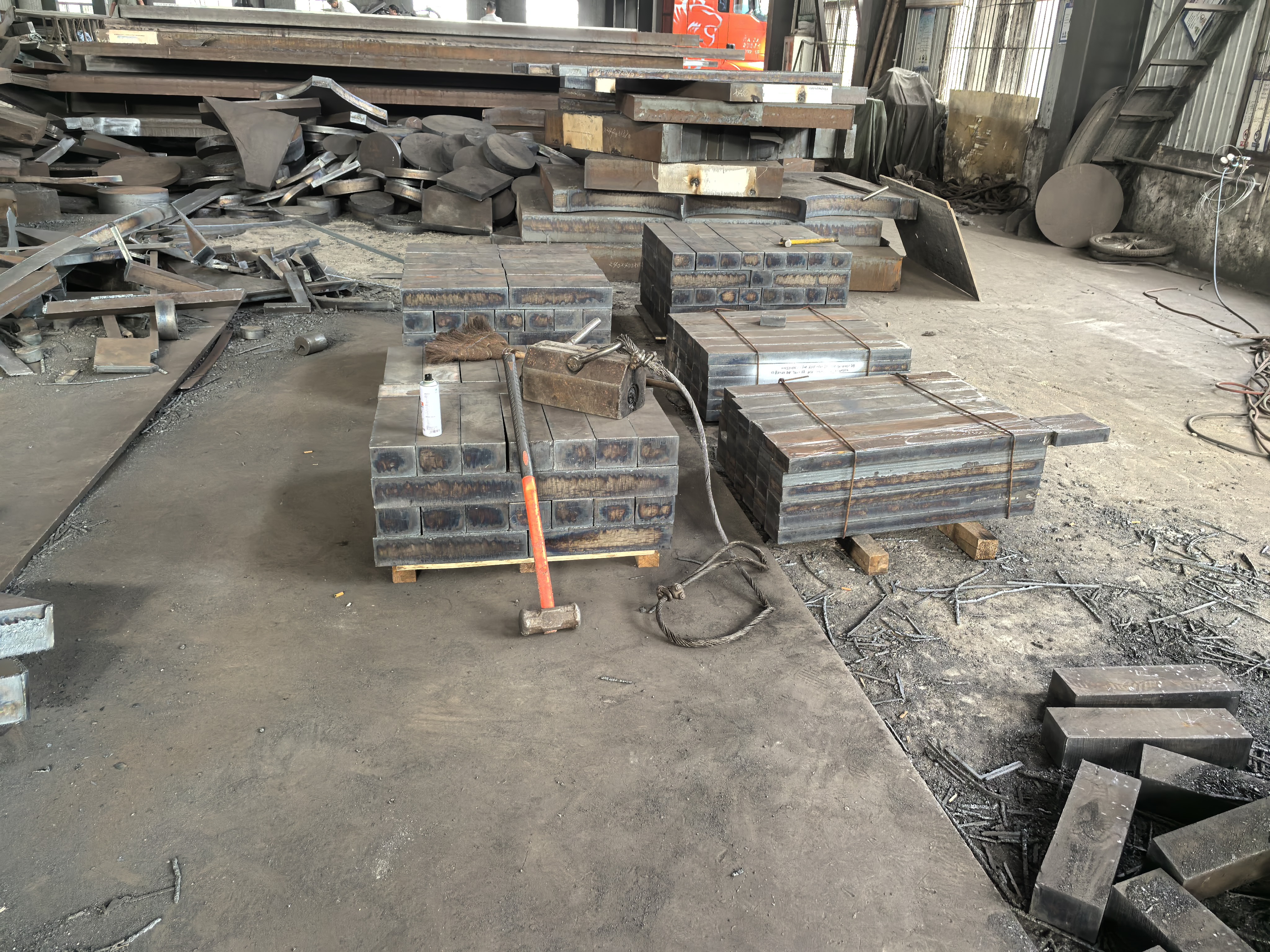
Three fabrication reminders
- Cutting: plasma or laser for thick NM500+, flame with ~100°C preheat to avoid edge cracking
- Welding: low-hydrogen consumables, filler one hardness step below parent metal, 100–150°C preheat by thickness
- Cold bending: radius at least 3–5× thickness, bend line across the rolling direction; hot-form NM550 and above
Sizes and lead times
NM360–NM500 in 6–80 mm on the floor, WNM mill-spec grades 8–80 mm as back-up, MN13 in 6–20 mm. Wear plate invoices on theoretical weight; ask for the nesting drawing before ordering so utilisation is explicit — offcuts can be settled at offcut rates.