Storing steel plate: warehouse practice
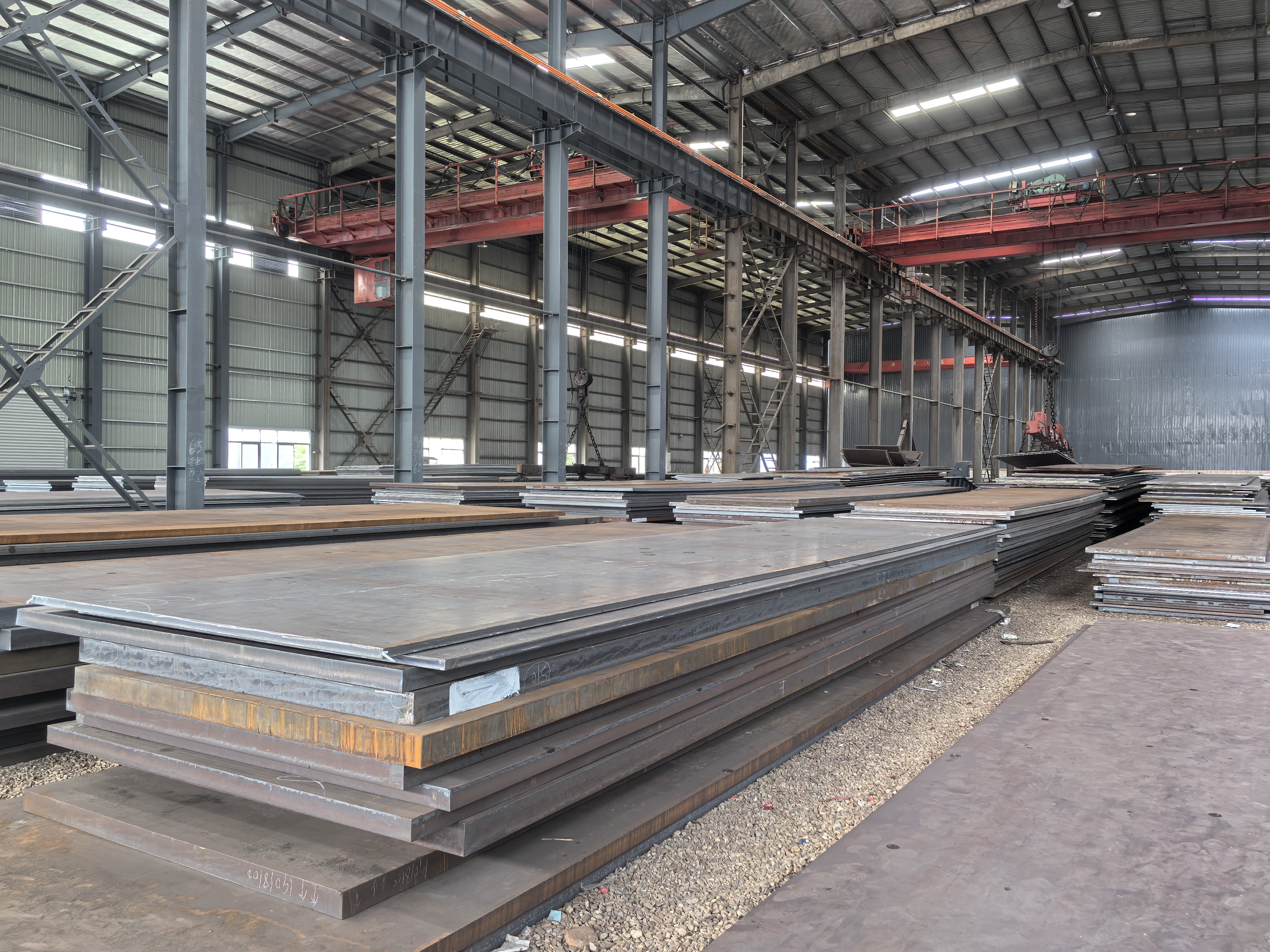
Plate often spends more time in the warehouse than on the job. Poor storage has a price list: rust deep enough to grind, stencils rusted beyond reading, crane dents that downgrade the plate. These are plain habits from twenty years of running a plate yard — nothing clever, all effective.
Dunnage and ground: the first line
Plate never touches the ground. Two or more dunnage rows per stack, spacing under 4 m, thickness matched so the stack sheds water instead of holding it. Compact the stack bases; check drainage in the rains. Thin plate and machined parts go indoors or under cover; outdoor thick stacks tilt 3–5° to drain.
Bays and marks: every plate keeps its name
Stack by grade and thickness band; bay signs list grade, size range and the heat-number index. The stencil is the plate's ID — lift with soft slings and corner protection, never bare wire rope across the marks; re-write faded marks with paint pens and log them. First in, first out; long-sitting plate gets moved first.
Three layers of rust control
- Physical: indoor storage, covers, air gaps between stacks — cut off long-standing water films
- Chemical: shop primer or rust-preventive oil on cut faces and machined parts; proper export wrapping
- Turnover: the cheapest anti-rust is short storage — nest purchasing, FIFO, buy to the order rhythm
Surface flash rust brushes off for assessment: within half the negative tolerance, the plate serves as-is; deeper, grind and ultrasonically re-check thickness. Photograph rusty areas before dispatch to keep the handover clean.