Q690D high-strength plate: welding and carbon equivalent
Q690D is tempting: twice the yield of Q355, thinner booms, lighter machines, more reach. But quenched-and-tempered steel is particular — a welding procedure that ignores its rules throws the strength advantage away. From carbon equivalent to heat input, here is the control list.
Standards and designations
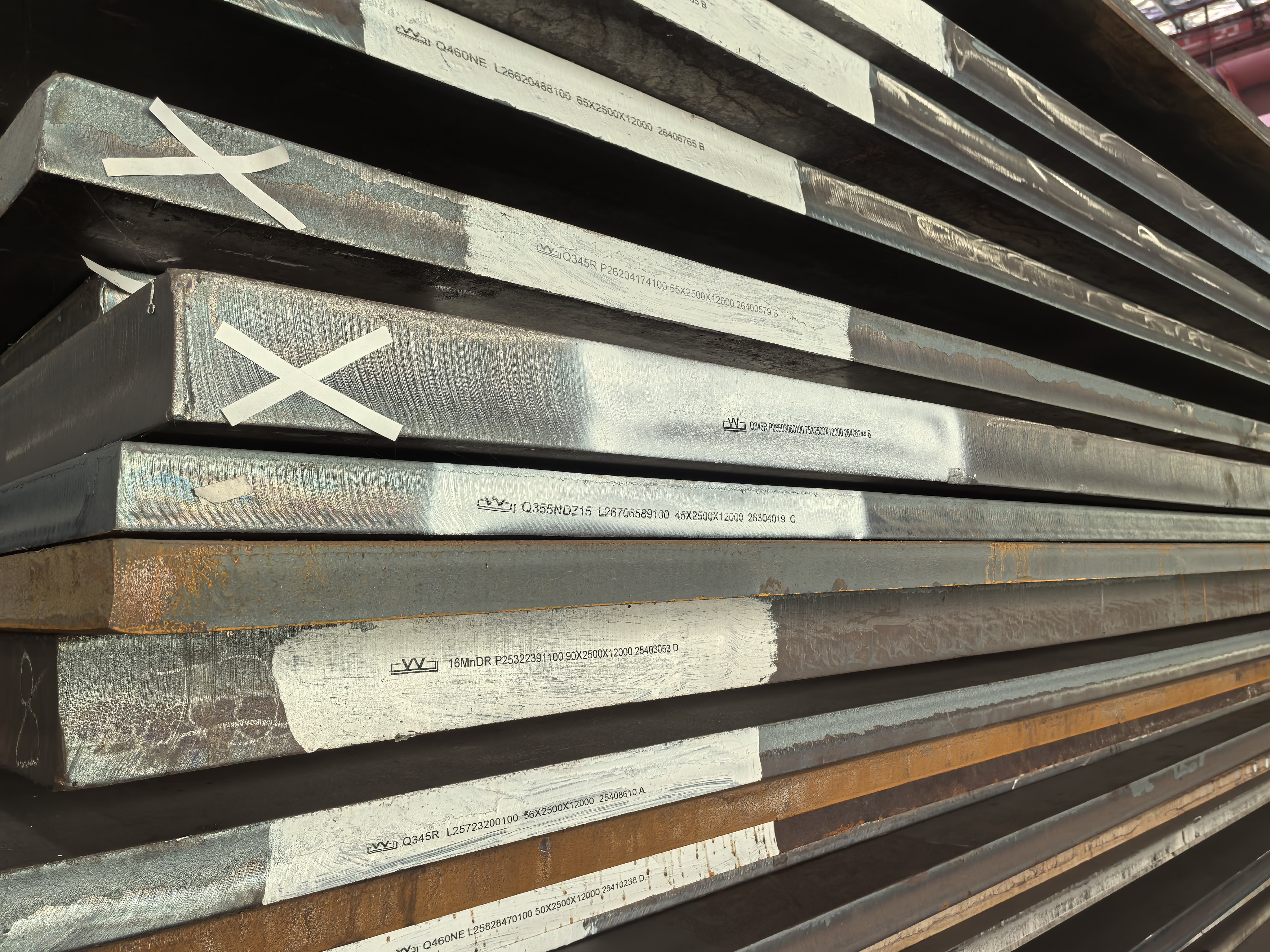
Q+T high-strength structural plate follows GB/T16270; in Q690D/E the D and E are -20°C and -40°C impact classes. OEM drawings often cite Wuyang's WQ690D mill specification; chemistry and properties sit close to the national grade, but procurement should follow the standard stated on the drawing rather than substituting.
Carbon equivalent: the preheat predictor
CEV = C + Mn/6 + (Cr+Mo+V)/5 + (Ni+Cu)/15. Higher CEV means higher cold-cracking sensitivity. Q690D typically carries a CEV ceiling around 0.65 depending on thickness and edition — write the ceiling into the order so the welding procedure qualification has solid ground.
Five welding points
- Consumables: low-hydrogen (diffusible hydrogen ≤5 mL/100 g), equal-strength or under-matched per the WPS
- Preheat: 100–150°C above ~20 mm or with high CEV; hold interpass in the same window
- Heat input: stay inside the qualified range — too high widens the softened zone, too low invites cracking
- Post-heating: hydrogen bake-out (250–350°C, 2–4 h) on heavy joints where the design calls for it
- Correction: avoid flame straightening on Q+T plate; prefer cold, machine-assisted correction
Ordering and acceptance
Beyond size and UT, specify on Q690D: delivery condition (Q+T), CEV ceiling, Z grade where boom root nodes demand it (Z25/Z35), and single-value impact at -20°C or -40°C. Compare certificate to stencil with an eye on the margin in yield and impact values — thin margins cause trouble downstream.