09MnNiDR low-temperature plate for -70°C service
Ethylene cold boxes, cryogenic tanks, deep-cold gas separation — once the medium falls below -45°C, ordinary vessel plate steps aside and nickel-bearing low-temperature steel takes the stage. 09MnNiDR is the volume leader in that band: -70°C impact guarantee, normalized delivery, and a friendlier price than high-nickel grades. Here is how it works and how to order it.
Why nickel: the source of cryogenic toughness
09MnNiDR follows GB/T3531 with carbon capped at 0.12% and nickel at 0.30–0.70%. Nickel lowers the ductile-brittle transition temperature; normalizing refines the grain. Together they keep impact energy up at -70°C. Read the grade: 09 is carbon in ten-thousandths, MnNi the main additions, D low temperature, R vessel.
The temperature ladder
GB/T3531 is a ladder of design temperatures: 16MnDR (-40°C) → 15MnNiDR (-45°C) → 15MnNiNbDR (-50°C) → 09MnNiDR (-70°C) → 08Ni3DR (-100°C, ~3.5% Ni) → 06Ni9DR (-165°C, ~9% Ni, Q+T). Design temperature picks the rung — stepping up wastes money; stepping down breaks the code.
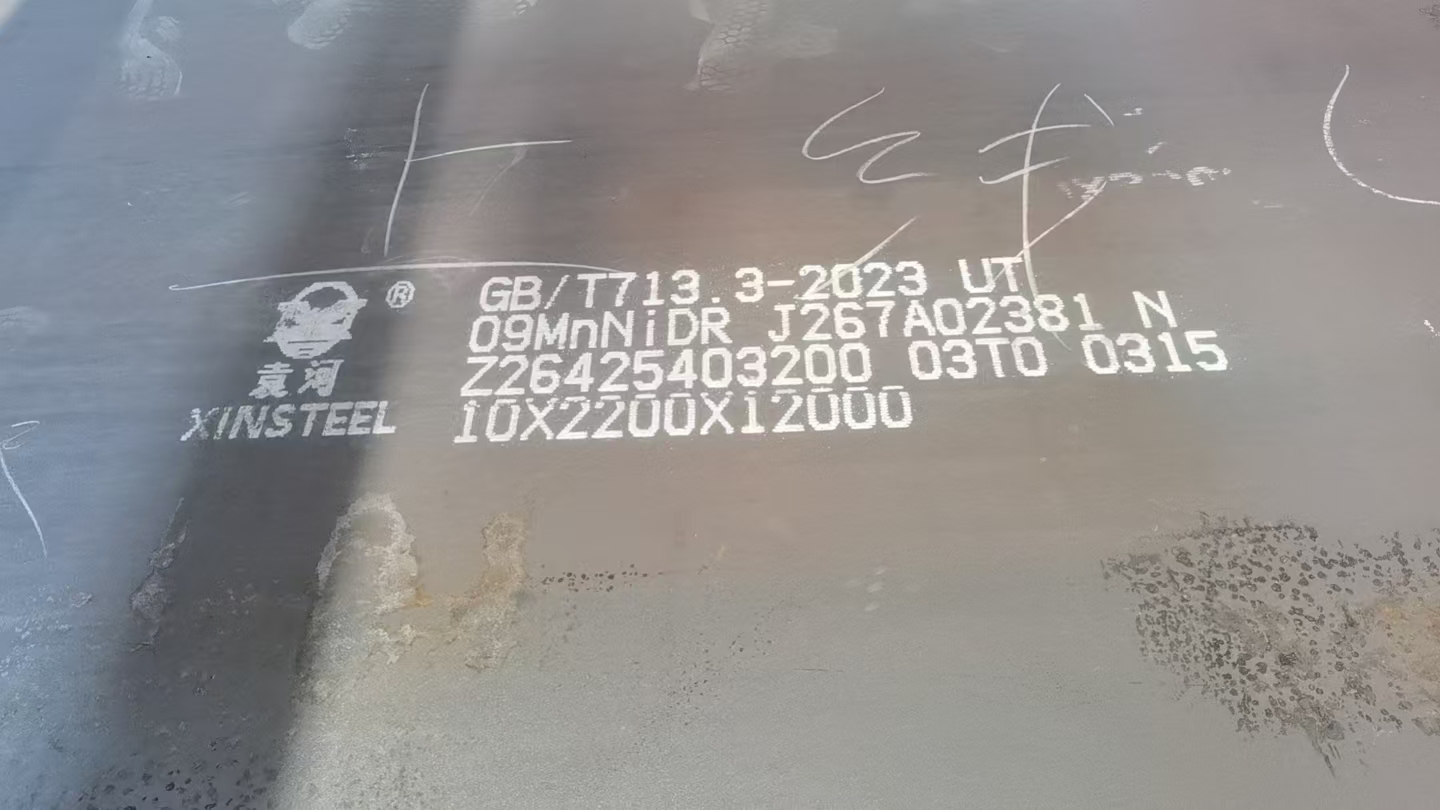
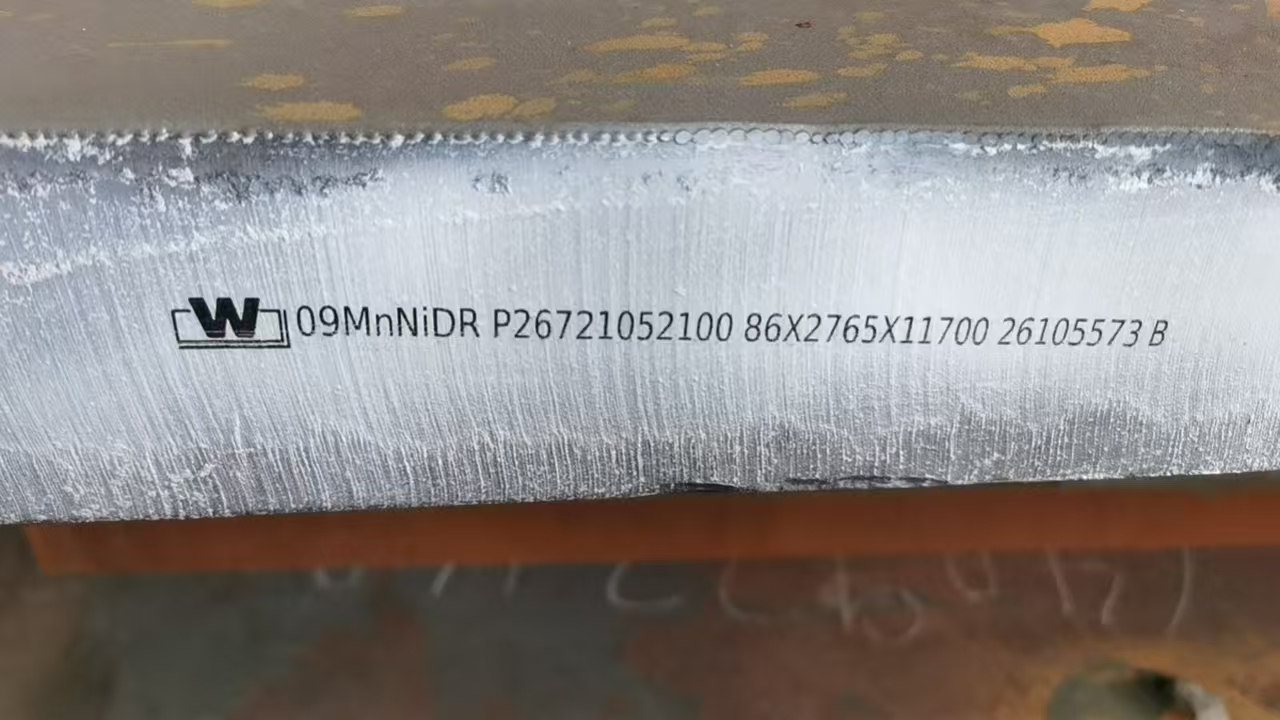
Ordering checklist
- Impact test temperature per the minimum design temperature — state -70°C (or per drawing)
- UT: plate by plate to Class II as a baseline, Class I for critical equipment
- Z grade (Z15/Z25/Z35) for thick welded joints under through-thickness load
- Condition: N or N+T, matched to the design property curves
- Nickel steel is booking material — allow 4–6 weeks
Acceptance and storage
Beyond the usual checks, read the -70°C impact values heat by heat on the certificate — single and average values must both clear the standard. Store on dunnage, away from carbon-steel handling marks, and leave machining allowance on cut edges before the welding shop takes over.